
TMEM175 is a lysosomal ion channel that functions as both a proton channel and potassium channel. It plays a crucial role in maintaining lysosomal pH, and is essential for lysosomal function. Mutations in TMEM175 lead to impaired lysosomal degradation and increased neuronal susceptibility to alpha-synuclein aggregation, and are associated with an increased risk of developing Parkinson’s disease.
Gain exclusive insights for your Parkinson’s disease pipeline with our suite of proprietary assays to identify TMEM175 inhibitors and activators. Our TMEM175 services are supported by the most expansive collection of HTS assays to deliver valuable information about how your compounds interact with this disease relevant lysosomal target. All assays generate EC50 values in line with literature reported values for known tool compounds, ensuring data reliability from day to day. Our validated cell line and robust assay platforms can be leveraged to assess what you need, from ion permeability profiling to inhibitor identification.
If you’re searching for TMEM175 variants or additional readouts to support your research, our team can help.
Proprietary ION technology that measures potassium efflux through activated TMEM175 channels expressed on the plasma membrane in real time. DCPIB and 4-AP are used to demonstrate a robust hit identification capability. The measurement of potassium yields physiologically relevant data for TMEM175 when compared to other surrogate readouts.
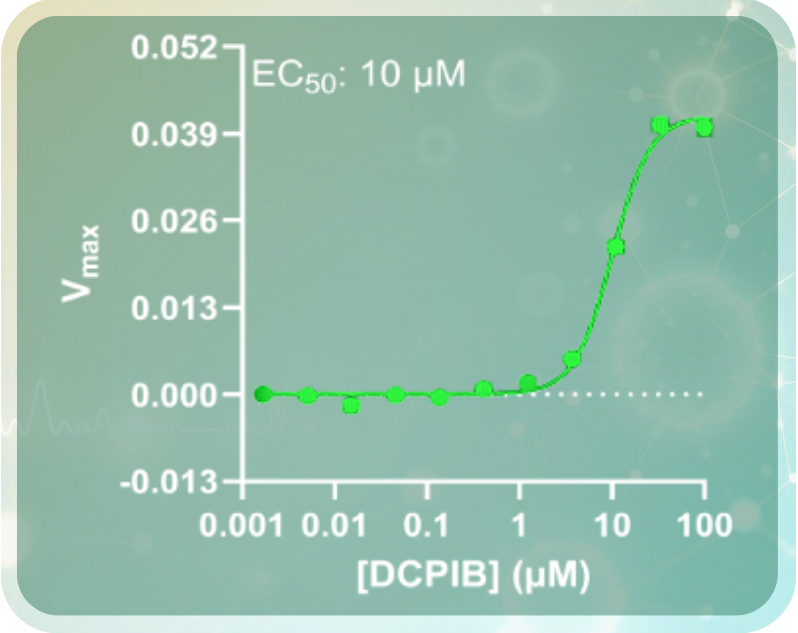
Gold standard for potassium channel drug discovery. Thallium acts as a surrogate for potassium ions to probe TMEM175 channel activity. This solution is able to identify activators and inhibitors of TMEM175, but requires longer compound incubation times to generate a robust response.
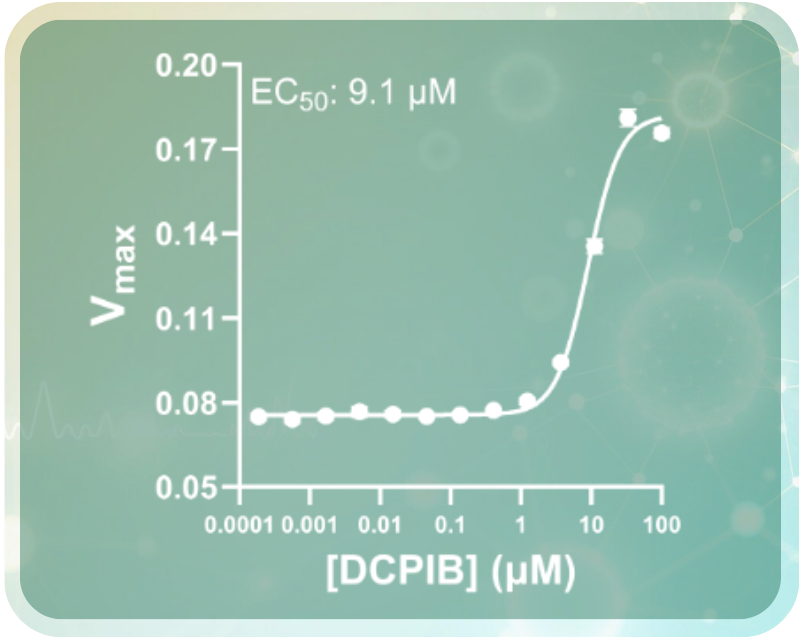
Proprietary ION technology that measures thallium efflux in response to TMEM175 activation. This assay produces the largest screening window of all available assays, and can be used to identify activators or inhibitors. TMEM175 activation is visualized in real time upon stimulation with DCPIB.

Measures proton transport through TMEM175 upon activation with DCPIB. As a predominantly proton channel on its native lysosomal membrane, this physiologically relevant readout can help you identify compounds that alter the proton conductance of TMEM175.
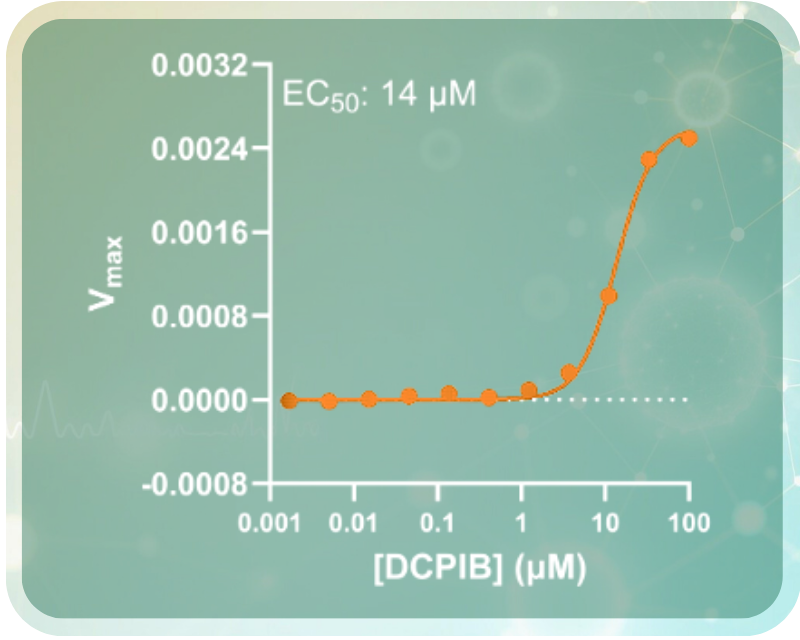
Powered by our Halotag-compatible thallium indicator collection, we’ve enabled HTS of TMEM175 activity expressed on lysosomal membranes inside viable, intact cells. Available in 384-well plate formats for high-throughput drug discovery campaigns. No lysosomal manipulation or isolation required. Probe TMEM175 in its native membrane and environment to get the most relevant insights into target engagement and TMEM175 pharmacology.
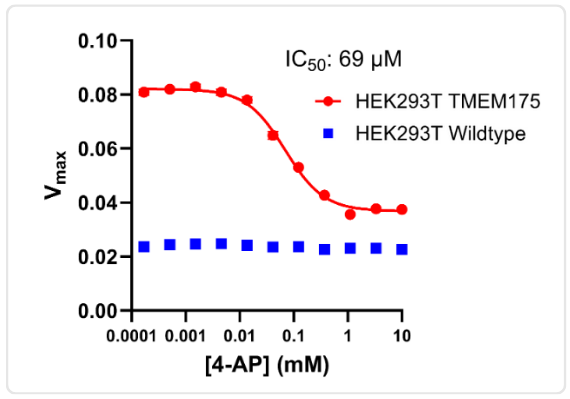
Our proprietary thallium dye is localized to the lumen of lysosomes to measure thallium flux across the lysosomal membrane in intact cells. Enables the identification of activators, such as DCPIB, and inhibitors, like 4-AP, of lysosomal TMEM175 using standard HTS methods (384-well format).
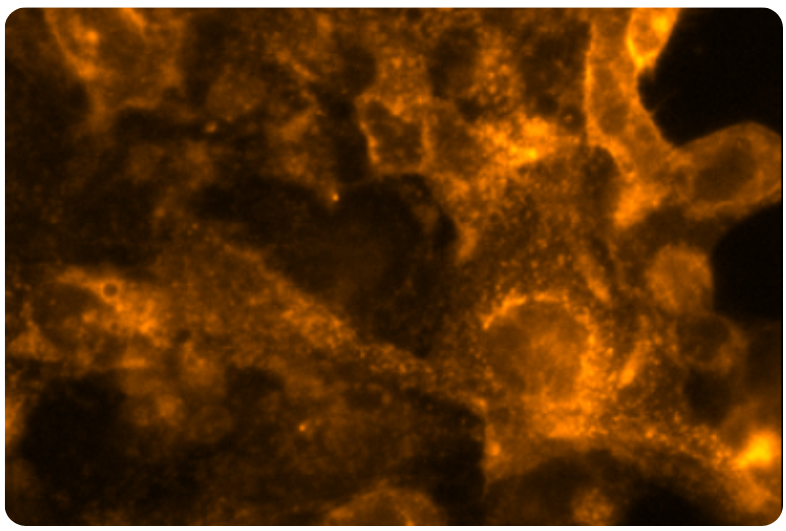
ION Thallos Gold-HTL loaded lysosomes
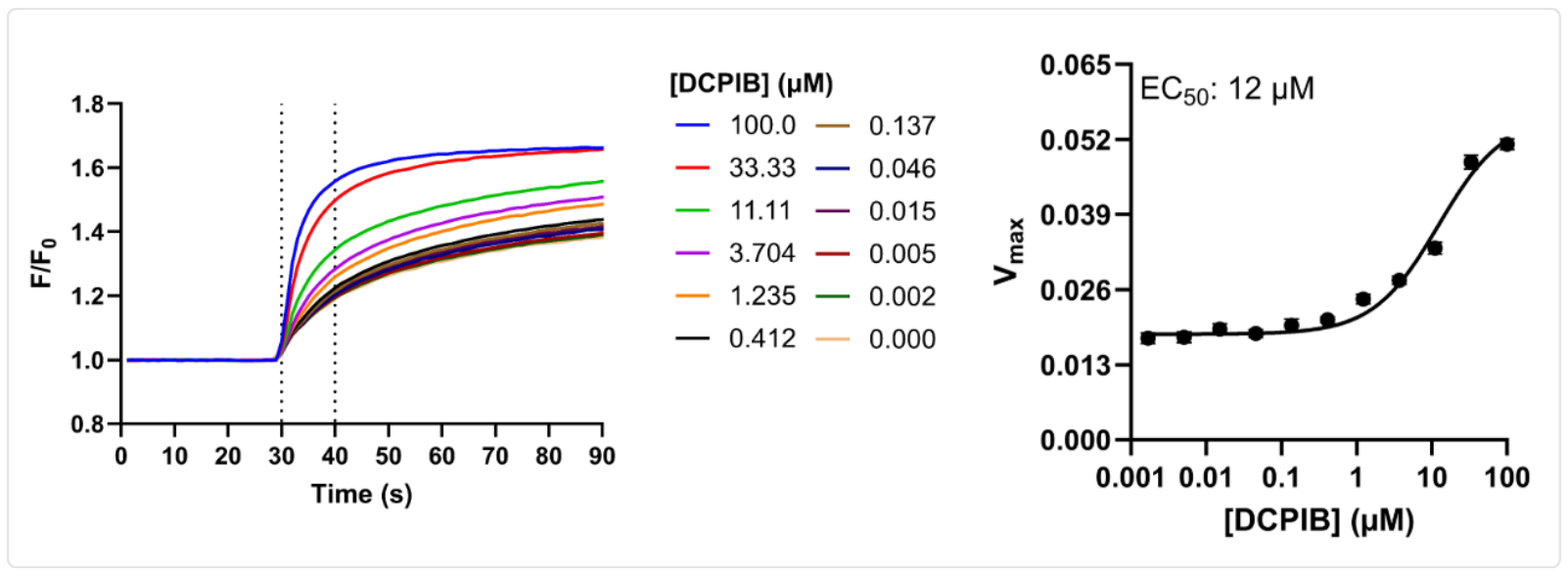
Sample activator and inhibitor data using our lysosomal drug discovery platform for TMEM175 assays. Included data are normalized kinetic traces (top left), a dose response curve to DCPIB (top right), and a dose response curve to 4-AP in TMEM175 expressing cells and wild-type cells (bottom left).
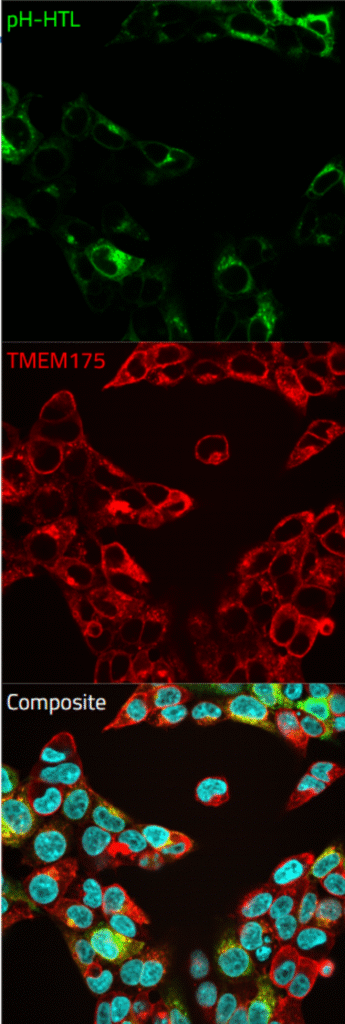
Immunofluorescence series of cells stained with pH-HTL, a TMEM175 antibody, and hoechst (a nuclear stain).
Using a custom pH-sensitive dye that is also a ligand for Halotag (pH-HTL), we can localize the pH indicator to the lumen of lysosomes. From there, we measure proton flux across the lysosomal membrane in intact cells. This technology enables the identification of activators, such as DCPIB, and inhibitors, like 4-AP, of lysosomal TMEM175 proton conductance using standard HTS methods (384-well format). The assay can be conducted using HTS instrumentation or high content imaging platforms for spatial resolution and realtime visualization of lysosomal pH.

Affect of Bafilomycin A on luminal lysosomal pH with TMEM175 overexpression and DCPIB treatment.
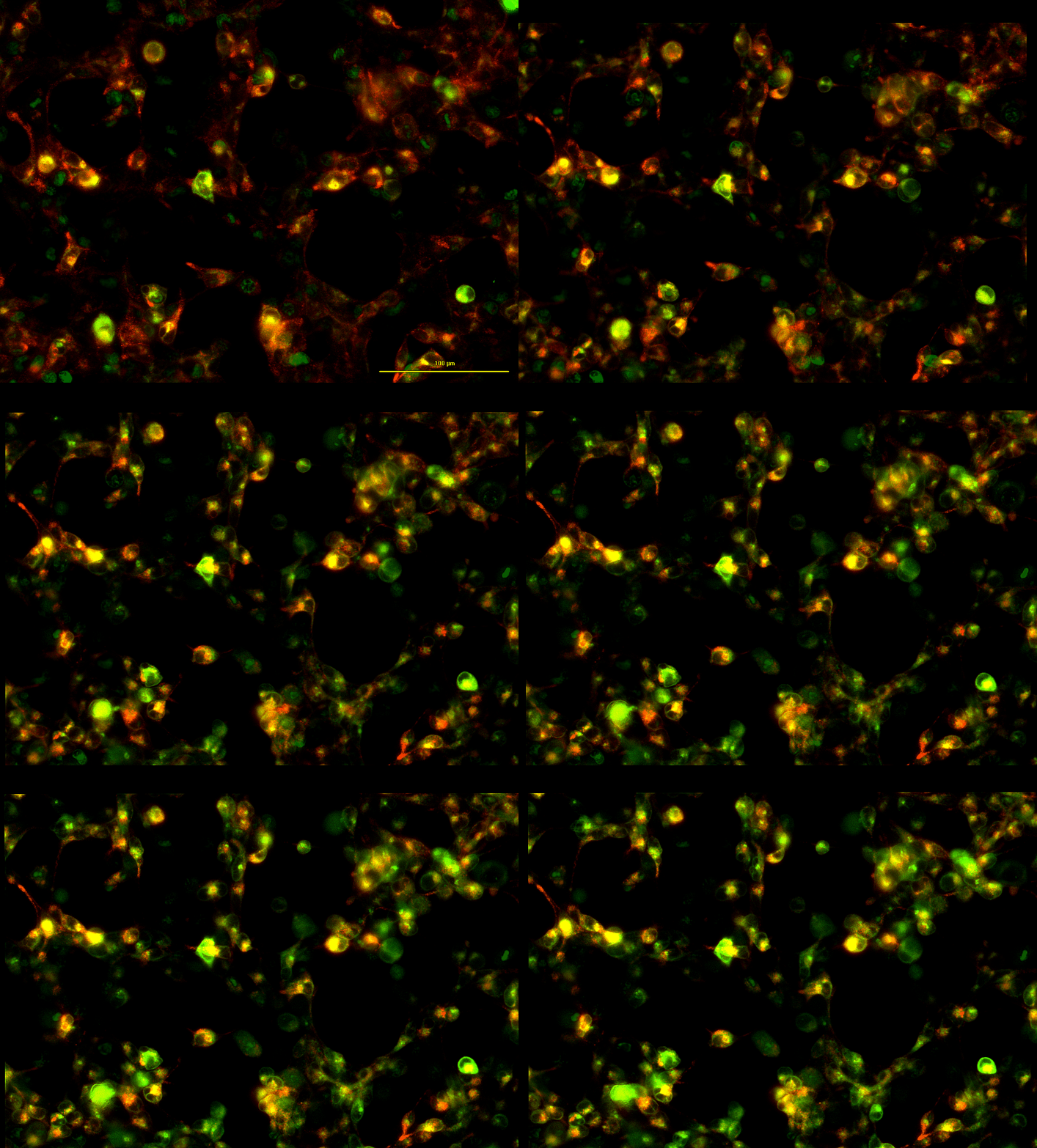
Timelapse of pH-HTL and TMR (pH-insensitive) labeled lysosomes after DCPIB treatment displaying an obvious shift from red to green, indicative of alkalization of the lysosomal lumen.
This platform can also be used to explore additional modulators of lysosomal pH, a crucial regulatory mechanism for lysosomal function, autophagy, and nutrient transport. Transporters including proton pumps (e.g. V-ATPase, SLC7A11), SLC transporters (e.g. SLC15A3 and SLC15A4), and lysosomal ion channels such as TPC2 (two-pore channel 2), all play a role in maintaining or using the lysosomal pH gradient.
Whether you are screening for TMEM175 modulators or exploring unique pharmacology, our TMEM175 platform offers proprietary insights, maximum throughput, readout flexibility, and physiologically relevant data to support your discovery needs.