Elevate your pharmacology with the Wavefront Panoptic at ION Biosciences. Simultaneously detect multiple signaling pathways to gain deeper insights about your pharmacology.
Beyond Single-Pathway Approaches
Modern drug discovery demands more than speed; it requires a comprehensive understanding of complex pathway interactions. Our multiplexed assay services allow you to probe multiple downstream signaling cascades within the same well, providing more complete pharmacological profiles in less time.
Wavefront Panoptic: Our HTS Workhorse Empowering Multiplexing
The Panoptic platform from Wavefront Biosciences is engineered for high-throughput screening. Its state-of-the-art optics and discrete, laser-based illumination enable multiple readouts while minimizing unintended excitation of additional fluorophores.
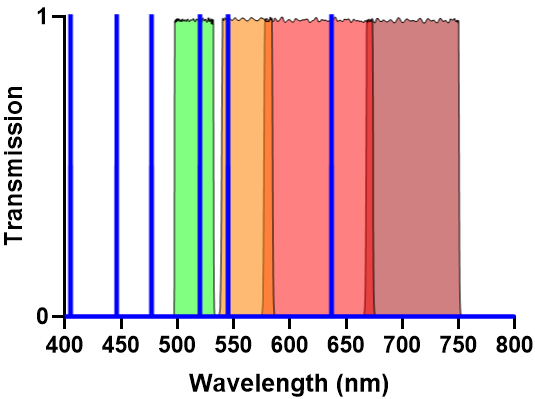
Discrete Illumination: Equipped with 6 laser lines (405, 446, 477, 520, 545, 637 nm).
Dual-Excitation & Rapid Switching: Optimized for optogenetics and FRET.
Filter-Based Emission: 4 filters designed to reduce bleed-through between channels.
High Frame Rate: Kinetic analysis up to 100Hz for deeper insights into cellular activity.
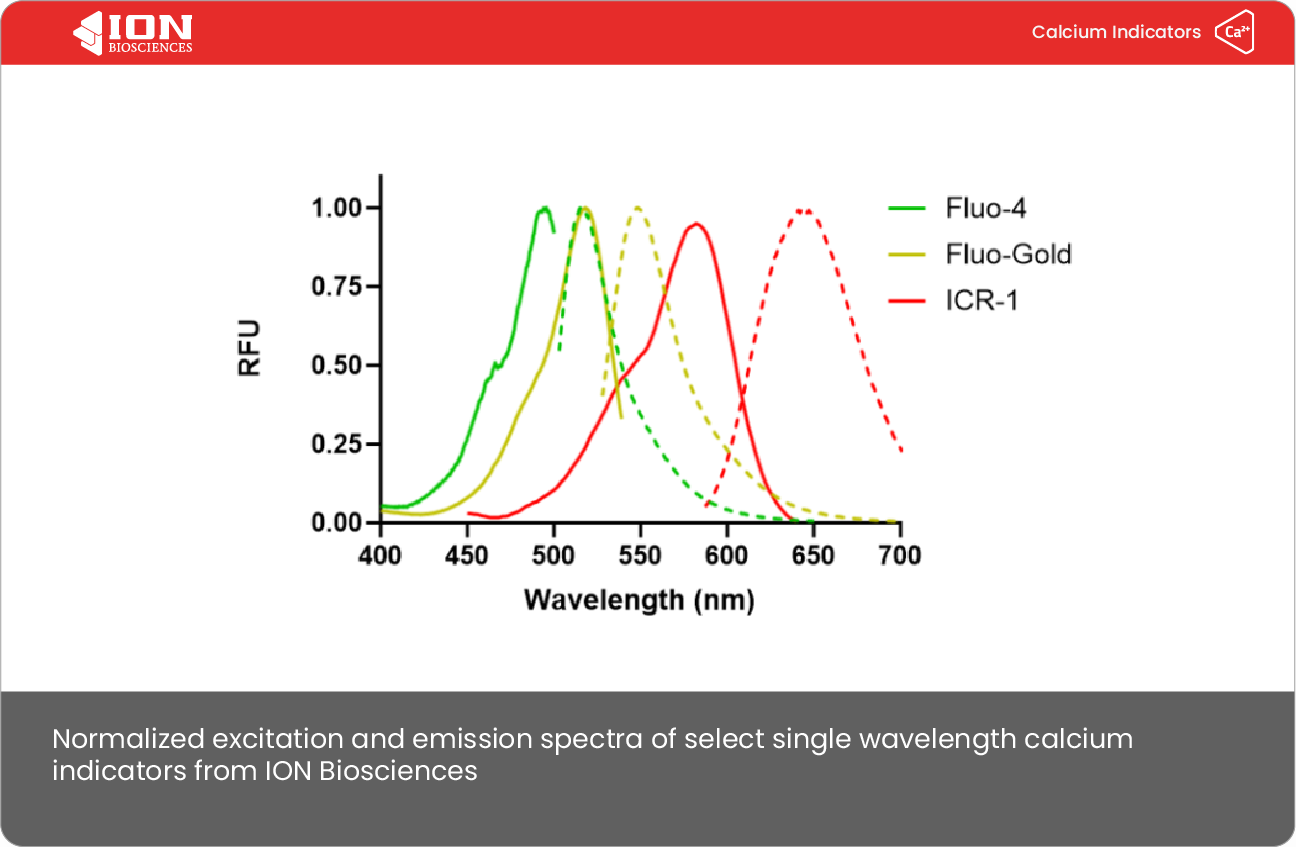
Fluorescent Ion Indicators Covering the Visible Spectrum
Our multiplexed assays are powered by ION’s proprietary, high-performance fluorescent indicators, including:
Unable to locate an off-the-shelf sensor available for your application – our custom chemistry team can build one fit for your application.
Combined secondary messenger readouts for GPCRs
With spectrally resolved fluorescent sensors, we can simultaneously measure two GPCR signaling cascades in a single well, in real time: streamlining workflows and saving you money, while expanding what you can learn about your compounds. A greener, leaner approach built for deeper insight into signaling bias and complex GPCR pharmacology.
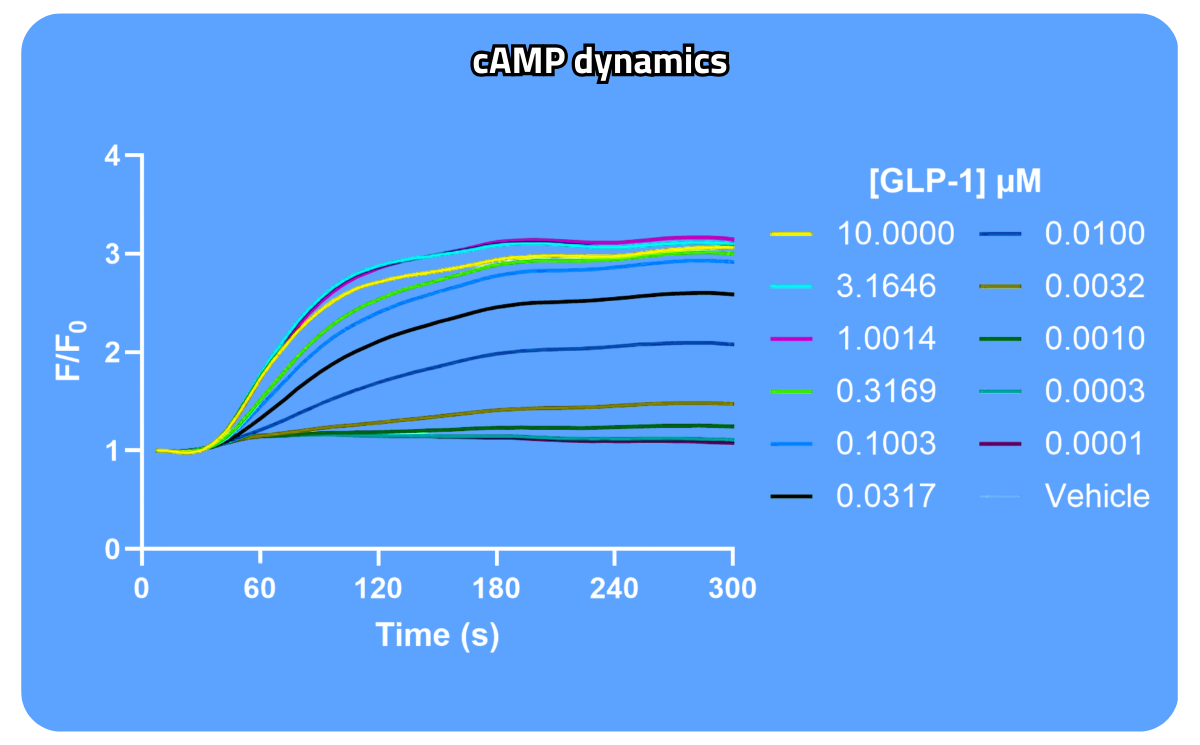
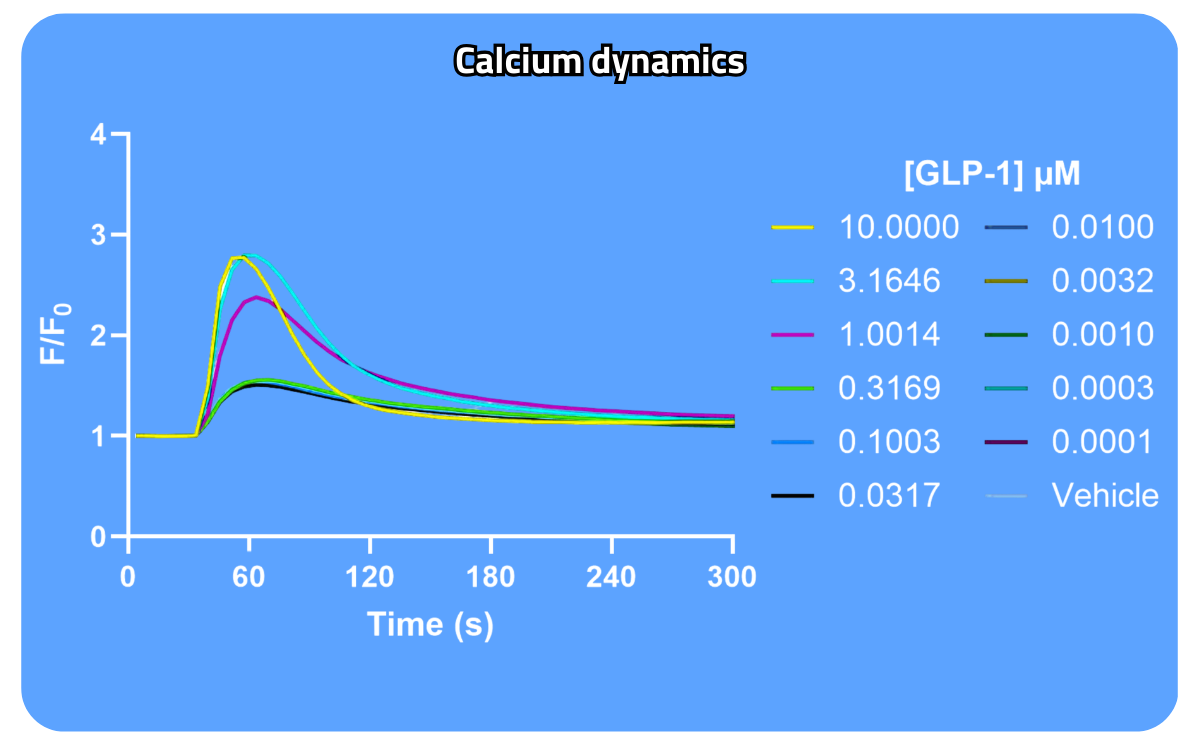
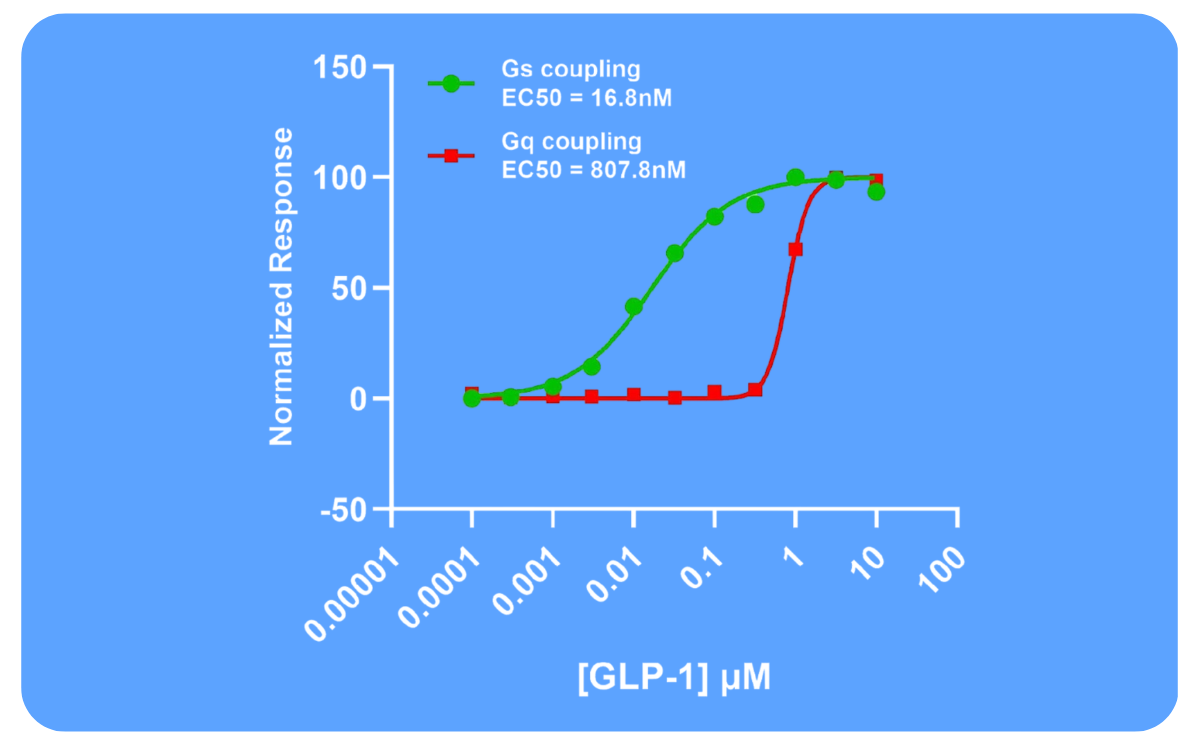
In one example, we assessed signaling of the GLP-1 receptor using a realtime cAMP sensor and red-fluorescent, calcium sensor to prosecute Gs and Gq signaling, respectively, upon exposure to GLP-1. We demonstrated a multi-fold affinity preference for Gs coupling when using the endogenous agonist GLP-1. Wondering if other compounds show the same signaling bias? Talk to our services team to find out.
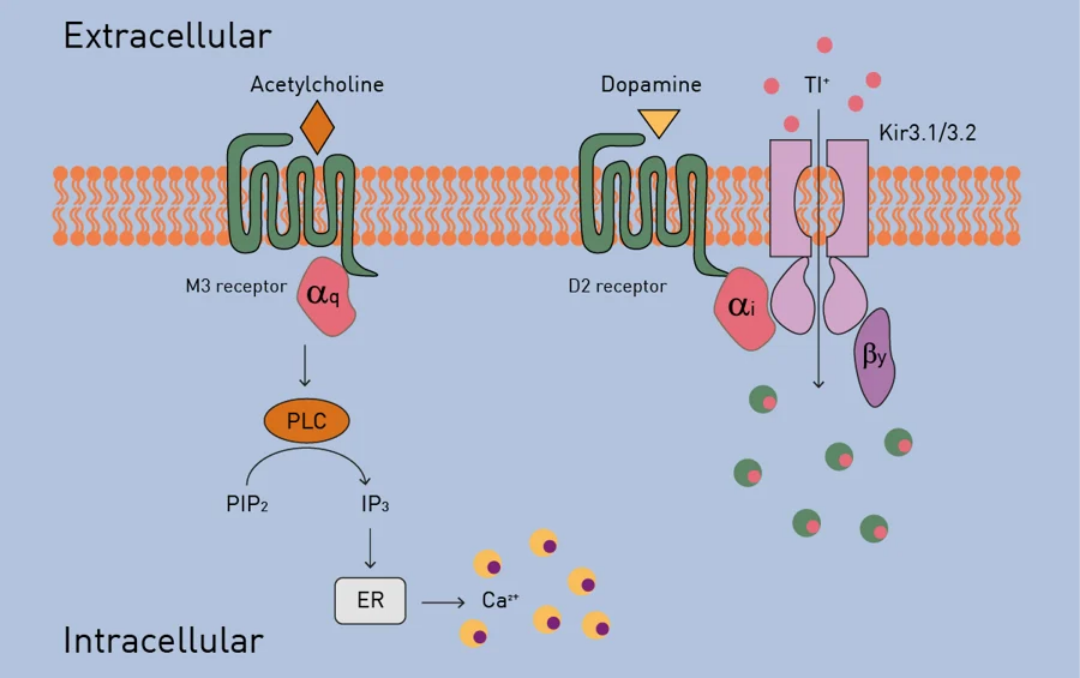
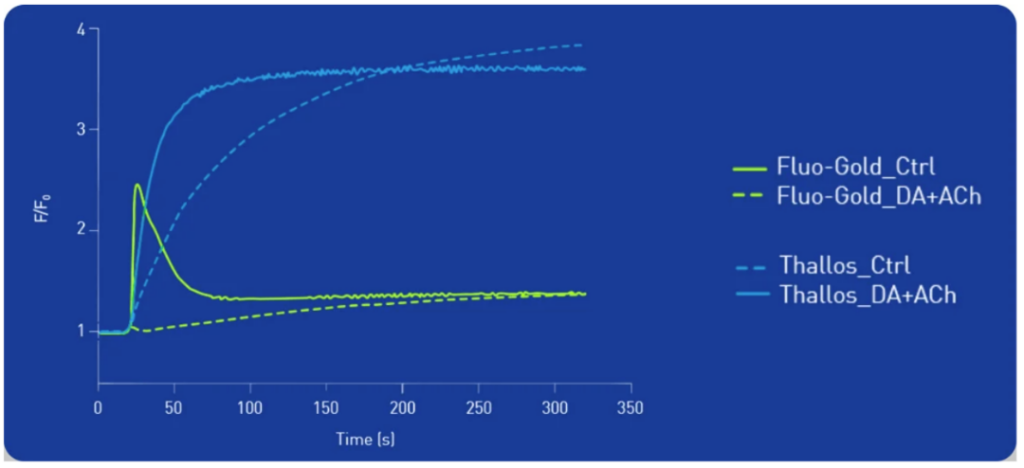
In collaboration with BMG LABTECH, we also demonstrated how distinct GPCR signaling pathways can be detected simultaneously. Using spectrally resolved dyes Thallos AM and Fluo-Gold AM, we were able to visualize Gi signaling through GIRK channel activation and calcium mobilization through traditional Gq agonism. Compared with single readout assays, this approach lets you capture more biology per well, dissect Gq/Gi signaling crosstalk, and generate richer, decision ready data; giving you an added edge over teams still running one pathway at a time.