Leverage ION Biosciences’ comprehensive collection of advanced tools and expertise to build precision assays tailored to your specific membrane protein of interest.
Our team has developed hundreds of assays for a variety of membrane proteins, including:
We manufacture fluorescent ion indicators and ready-to-use assays spanning the most challenging druggable membrane-protein targets.
We manufacture fluorescent ion indicators and ready-to-use assays spanning the most challenging druggable membrane-protein targets.
Exclusive Technology: The only provider of truly sodium-selective, Sodium Channel Assays.
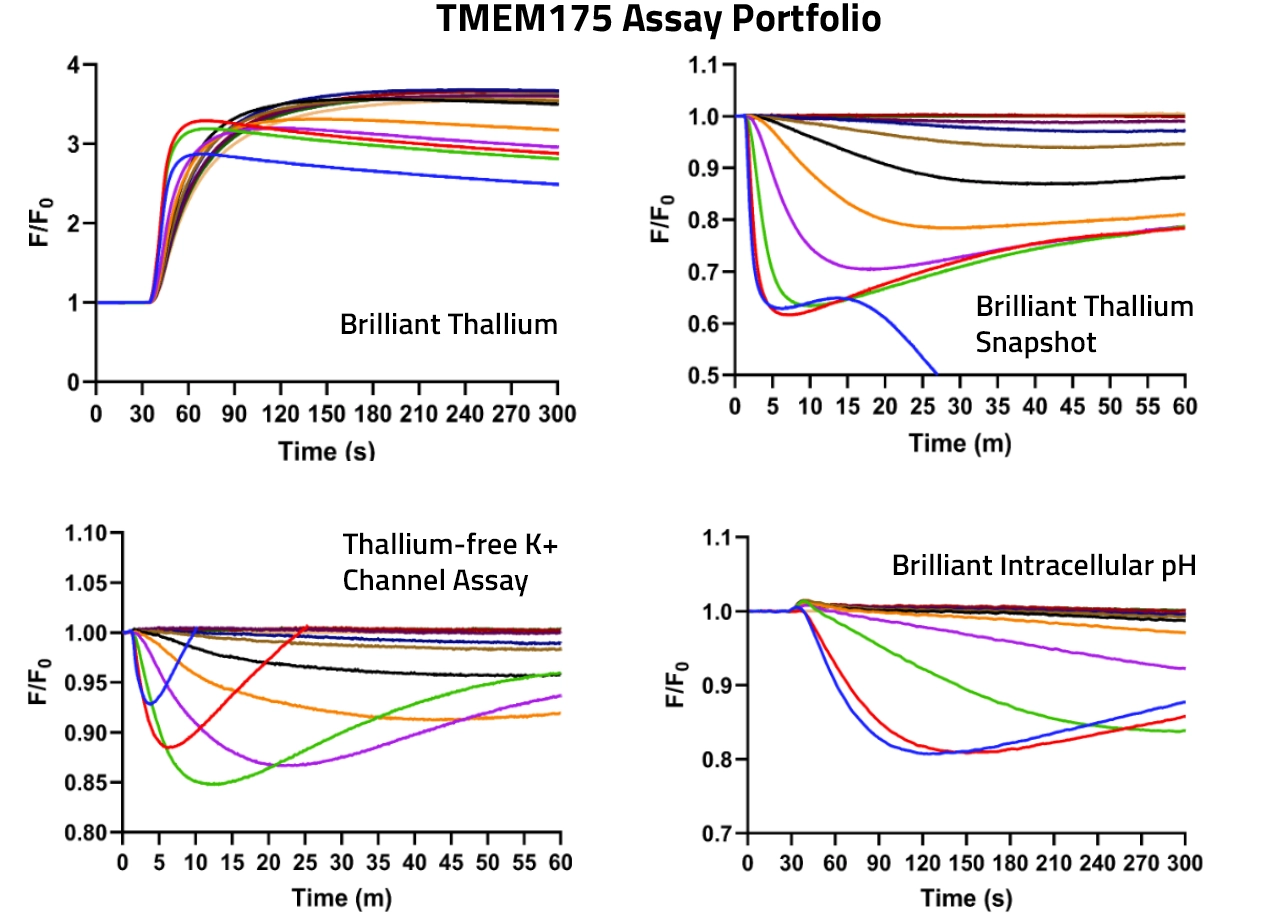
Extensive Portfolio: Access the industry’s largest collection of Potassium Channel Assays.
Validated Cell Lines: Sodium-Dependent SLC Transporter Assays with fully validated expressing lines.
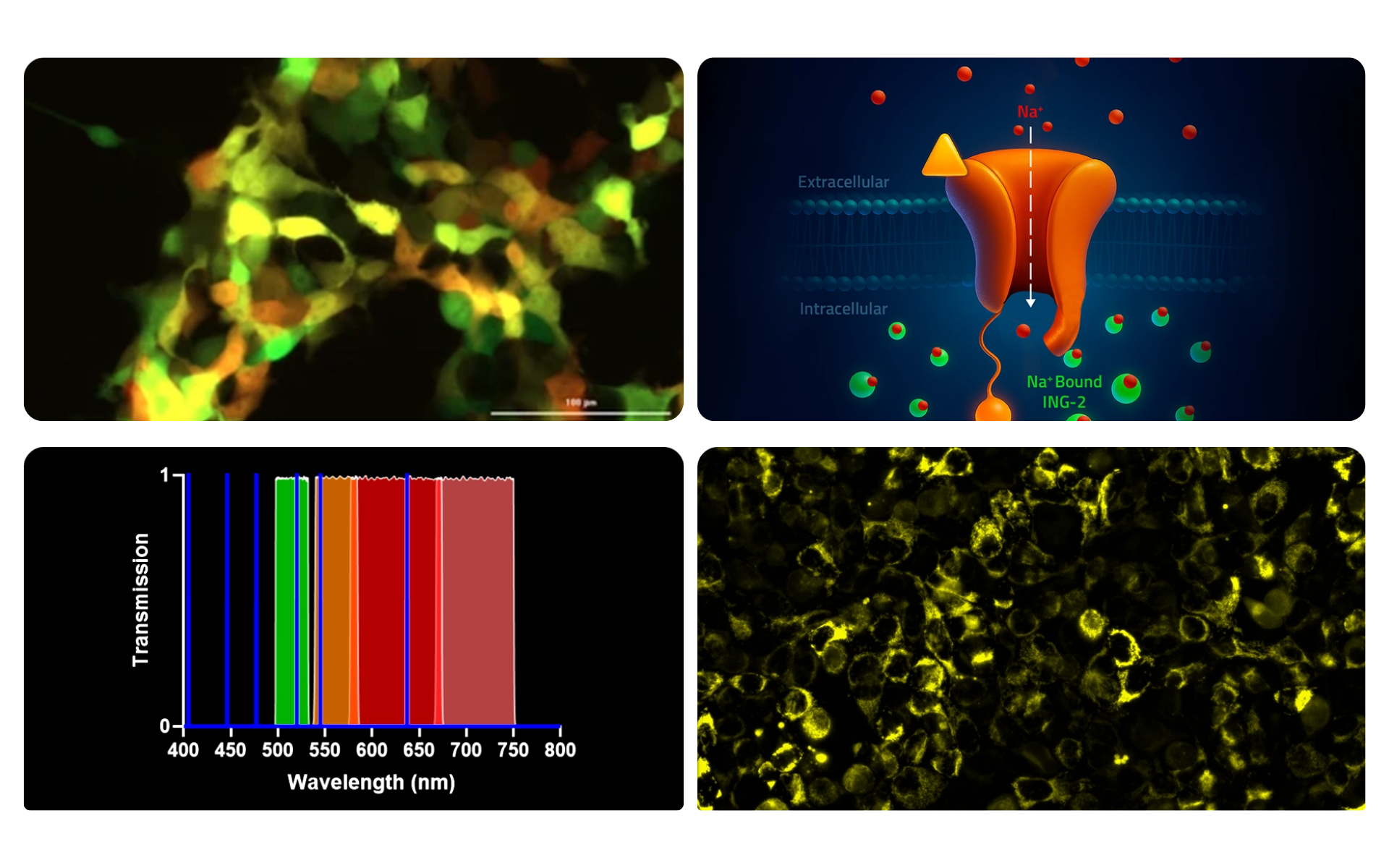
Advanced Multiplexing: A wide array of Calcium Indicators spanning the visible spectrum for multiple readouts in a single well.
Proprietary Platforms: HaloTag-compatible indicators enabling specialized organellar ion channel assays.
What We Build For You
From initial design to actionable data, our team delivers end-to-end assay development services for ion channels, transporters, and GPCRs.
Cell Line Engineering: Complete workflow from vector design to assay-ready monoclonal cell lines.
Target-Specific Assays: Custom assay construction utilizing proprietary ION tools and expertise.
Multiplexed Assays: Capture multiple readouts in a single well to maximize data density.
Organellar Ion Channel Assays: High-resolution tracking via our proprietary HaloTag platform.
Complex Liquid-Handling: Expert protocols including washout, dual/triple additions, and antagonism dynamics.
Powered by High-Throughput Technology
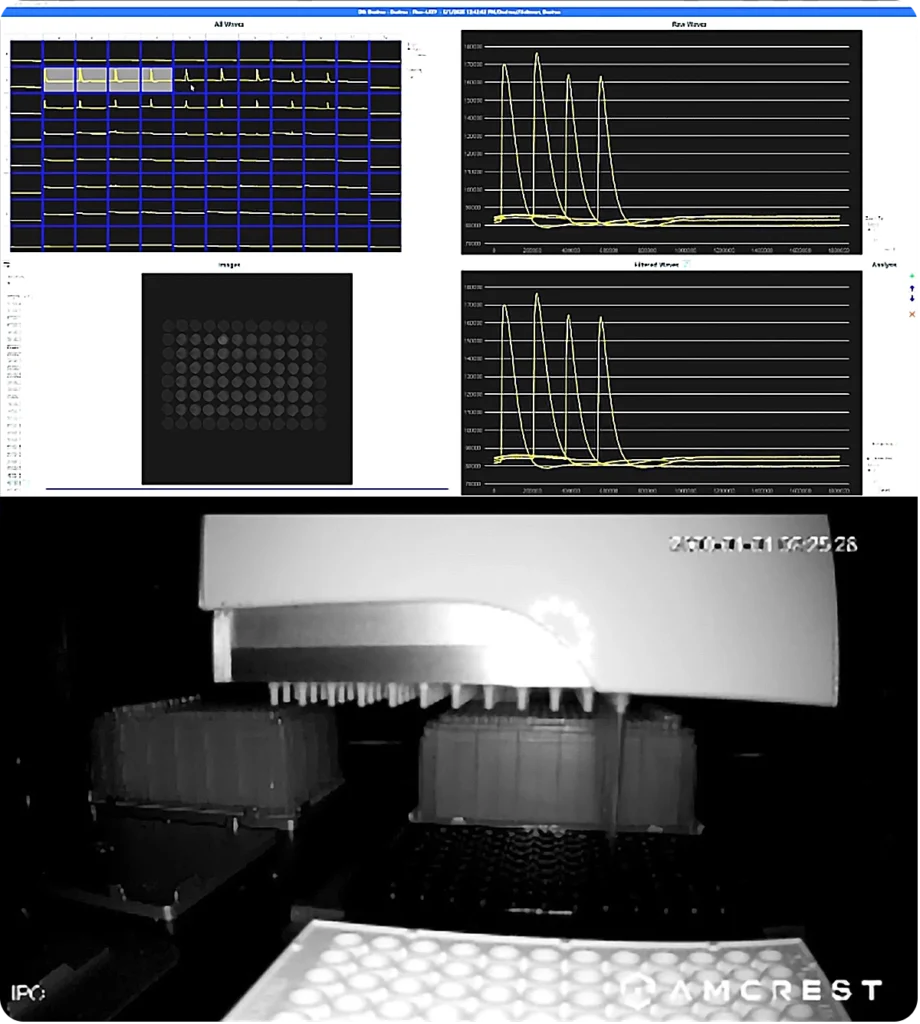
Our facility is anchored by the Panoptic® platform, designed for high-fidelity data capture in 96 and 384-well formats.
Advanced Optics: 6-laser system with low-crosstalk multiplexing and dual-excitation (optogenetics).
High-Speed Capture: Camera speeds up to 100 Hz for precise kinetic monitoring.
Complementary Instrumentation: Supported by FLIPR Tetra, Cytation 5, and FlexStation III.